My Beautiful Grandchildren

I've been away for awhile, so my blog has been put on the back burner. Both of my lovely daughters have each had a baby, only 5 days apart, and continents apart. The amazing thing about this is that they share the same birthday, 2 years apart!
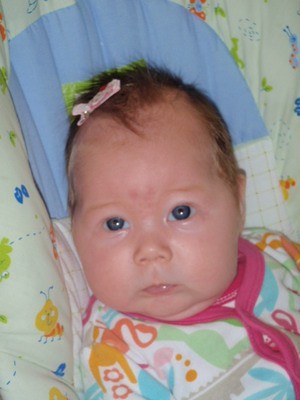
Little sweet baby Ila Sherry Marie was born to Jill and Mark, and of course big brother Asher, on Oct 13, 2011, 8:48 pm, weighing in at 6 pounds, 14 ounces, 20 inches long. She is a true beauty and a very happy little girl. Her big brother, Asher is very pleased to have her, and very fond of her.


Daddy's little girl!


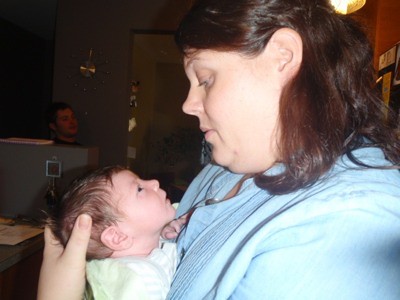
Ila is such a beautiful little sweetheart! So smiley, and below so tired with her Uncle Brett, brother and cousin Jack!


Hanging' with my couz, Jack. Everytime our Moms laid us down together, Jack would grab my hand! isn't that sweet?


Baby Jack Dennis was born on Oct 18/11, weighing in at 8 pounds, 10 ounces, 23 inches long at 7:32 am.. To proud parents Lindsay and Scott.


Picture of Jack with his new toque, that acts as a scarf as well! Too Cute.


I love my bath time!


It looks like Jack is making sure that's his Mommy!


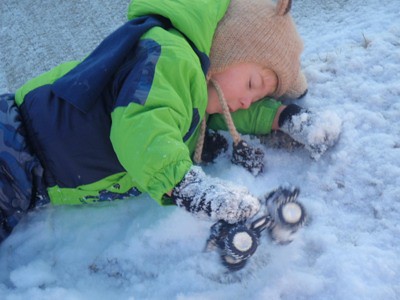
He really, really liked the snow, (Asher kept calling it the ocean).


Having fun with my friend Gracin!


Just hanging out at Grandma's!

CTHT - Technical and Horticultural Center of Tamatave (Spice and Fruit Factory)

CTHT - Technical and Horticultural Center of Tamatave (Spice and Fruit Factory)

We toured a Malagasy nursery and factory that makes jams, jellies, and juices from local produce and the factory also processes spices such as cloves, black and red pepper, vanilla and cinnamon

CTHT, a firm of agricultural commodities and food products imported and exported in Africa based in France and the French laboratory Vanalyse specialized analytical engineering, quality control, analysis, expertise, studies and research, carries out quality checks on the vanilla, spices (clove, pepper, pink pepper), essential oils and Cocoa (the region of Ambanja). Mobilized in all ports of Madagascar,  staff are also involved in the expertise of cargo and surveillance unloading of cargo for import.

As part of the project Ambatovy and with financial support from thePGRM (Support Program for Management of Mineral Resources), the CTHT is responsible for the implementation of the Centre de Formation Agricole de Tamatave. 

The Centre aims to offer by way of learning a conversion of populations affected by the project and create income-generating activities for people opened up. 
Training topics offered are: 
• market gardening, local farms are small, so there are many farmers that receive training on European standards that are required
• fruit trees 
• beekeeping, different types of honey, including vanilla favoured which is very good.


The factory


 First we visited the nursery.  


Stevia seeds are started here.  Planted one by one.  Madagascar is only allowed 3 kgs of seeds per shipment, which comes from Europe, and so they need to grow, then re-seed this, due to the limited amount of seeds that are allowed in.  Very labor intensive.
  
 This Stevia full grown.  Its leaves are much sweeter than table sugar, though they don't contain any sucrose or fructose, actually 10 times sweeter.  It's  the sweetener that is used in Coke Zero.  Madagascar is not yet aware of the demand that North America has on this product, as they are not aware of sweeteners or diet type ingredients.


There are over 45,000 various plants started here or fruits and spices

 A rain gauge.  The rain is measured daily, as this is very important to the growth of the plants.  In recent years, rain has not been consistent, therefore they need to monitor the rain, to determine how they water the plants.


 One of the lovely "air plants".  These are not planted in soil.  They grow attached to trees, etc.

 This particular tree is eaten by the locals and has high nutritional value

 Our group that took the tour

Our very knowledgeable tour guide at the factory that explained the processes of production and packaging for spices and jams for export

 Sacks of cloves for export.  Most of the cloves go to Germany

 Drying black pepper.  This particular blend has a "tail" on it, and is extremely aromatic.  This type of pepper is only grown in Madagascar.

 A closer look at the pepper

Fruit for juice 

 Once we were inside the production area, we needed to gown up!  The standards are set and enforced by France.

 The assembly line for packaging the jam

 The jam is sealed one by one.  Very labor intensive.  They put a lid on the container, seal it, stack them, one by one, then packaged them for shipment

 Here they are selecting the imperfect pepper seeds

 Hand packaging vanilla beans for shipment

 We're in front of red pepper seeds, ready for shipment.  Most of the product goes to Europe.

 A view from the upstairs.  Not a very big factory for what is actually processed and packaged.

 Separating shaved cinnamon for inspection, then production

Posing for the camera
A very good tour!
International Womens Day in Madagascar

International Womens Day in Madagascar

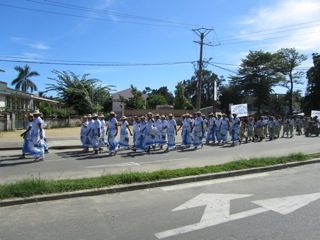
Each year around the world, International Women's Day (IWD) was celebrated on March 8, 2011.   Hundreds of events occur not just on this day but throughout March to mark the economic, political and social achievements of women.

Below are pictures of the women that marched through Tamatave, Madagascar on March 8th 2011, in their traditional dress.


Traditional Beliefs and Religion in Madagascar

Traditional Beliefs and Religion in Madagascar

Religions:     Traditional Beliefs -52%
                                                       Christian 41% ( of the Christian, it is divided almost evenly    between Catholics and Protestants)
Muslin 7%

Thus majority of the Malagasy are the followers of Christianity and they are sub-divided into Roman Catholic and Protestants. The villages of the central highlands of Madagascar have two churches, one of them is Roman Catholic Church and the other is Protestant church. 

Roman Catholic

Protestan Church

 Shrine beside the Port.  You can't even see this from the road, even thought it's right there, as it's cover with vines.  This is a side view.  We drove by this many times, before we realized it was there.
Inside of the above shrine.  This is a Roman Catholic Church.

 Protestant church


This is the Malagasy tradition of Famadihana, or the "Turning" of the Bones.


Approximately 50% of the country's population practice traditional religion, which tends to emphasize links between the living and the dead. The Merina in the highlands particularly tend to hold tightly to this practice. A powerful individual may establish a fady (taboo) in his or her lifetime that all their descendents or those of community members will be required to respect well after their death, meaning that when traveling in Madagascar it is advisable to seek out village elders or authorities and inquire into local fady in order not to inadvertently transgress and offend the local population. This veneration of ancestors has also led to the tradition of tomb building and the famadihana, a practice whereby a deceased family member's remains may be taken from the tomb to be periodically re-wrapped in fresh silk shrouds known as lamba before being replaced in the tomb. The event is an occasion to celebrate the loved one's memory, reunite with family and community, and enjoy a festive atmosphere. Residents of surrounding villages are often invited to attend the party, where food and rum are often served and a hiragasy troupe or other musical entertainment is typically present.
For many outsiders the practice, which involves exhuming dead relatives, rewrapping them in fresh grave clothes and dancing with them around the tomb, can seem almost impossibly strange, ghoulish even.
But for the Malagasy, for whom ancestral worship remains important, it is an essential way of maintaining ties with the dead.
Throughout winter (June to September)
The tombs of the various peoples around the island differ somewhat in form. Merina tombs tend to be solid, stone structures, built partially underground, with a chamber in which the bodies of ancestors are kept on shelves, wrapped in silk shrouds. The traditional tombs of the Mahafaly in the southwest were built of stone but surmounted by intricately carved wooden posts depicting human and animal figures. More recent Mahafaly tombs, particularly those built by rich families, are often made of concrete, with glass windows, brightly painted designs and often remarkable depictions of airplanes, taxicabs, or other modern paraphernalia mounted on the roof. At one time, it was the custom of the Sakalava people living around the Morondava River on the west coast to decorate their tombs with carvings showing explicit sexual 
activity.  These were meant to illustrate the life-giving force, or fertility, of the ancestors.

Among the Merina and Betsileo peoples of the central highlands, the custom of famadihana "placing" or "turning" of the dead reaffirms the link between the living and the dead.  This occurs when a person is taken from a temporary to a permanent tomb in the tanindrazana, and the remains are taken out of the tomb to be wrapped in new shrouds, or when a body is moved from one tomb to another.  These ceremonies are costly, mainly because of the expense of providing food for a large number of relatives and guests.